
Basic Scuba Safety Rules
Most important scuba diving safety rules. From buddy checks and gas monitoring to safe ascents and dive planning.

Understanding Risk
It starts by distinguishing hazard from risk and apply procedures and equipment choices to reduce likelihood and impact.

Human Factors in Diving
Recognize normalization of deviance, manage cognitive load, and replace rushed habits with checks and communication that keep teams safe.

Emergency Preparedness
Confirm roles, plan contingencies, track divers, stage surface spares, and run honest debriefs to keep small issues small.

Plans and Equipment
Smart surface kits, concise pre-dive checklists and check-in systems, and know when a pony bottle adds meaningful redundancy.

Medical Risks
DCI and AGE including PFO, CNS oxygen toxicity, nitrogen narcosis, motion sickness, and leg cramps. Learn prevention, recognition, and response.

Certifications Worth It?
Explore which scuba certifications are truly worth pursuing, from practical options like Nitrox and Rescue to essential safety training in CPR and oxygen use.

Dive Planning
Learn the essentials of dive planning, from gas calculations and nitrox limits to, gas planning and pre dive routines that keep you safe and prepared underwater.

Core Diving Skills
Build a foundation with core skills: gear setup, hand signals, buoyancy, trim, descents, safety stops, mask clearing, free flow response, and sharing air.

Entry & Exit Skills
Master the essential entry and exit skills that keep every dive safe and controlled, from giant strides and shore entries to exiting the water.

Abovewater Skills
Build confidence with practical surface techniques, including shore vs boat diving, efficient surface swimming, and signaling for safety.

Underwater Skills
Develop the underwater skills that set confident divers apart, from hovering and advanced finning to buddy positioning and safe SMB deployment.

Buddy Skills
Strengthen your teamwork with practical buddy skills, from clear role assignment and positioning to mentoring new divers and handling challenging situations.

Teamwork Skills
Build effective team diving habits with skills that improve awareness, shared responsibility, and coordinated ascents from start to finish.

Dive Culture
Explore the unspoken side of scuba diving, from culture to jargon, buddy dynamics, ethics, and the habits that shape how divers think and behave.

Philosophy & Ownership
Understand the tradeoffs behind gear ownership and standardization, and when advanced options make sense for recreational divers.

Renting vs Owning
One of the first big decisions divers face is whether to rent or own. It depends on how often you dive, where you dive, and your personal preferences.

Which Gear & Why
Choose scuba gear that fits your goals, budget, and future plans. Buy gradually, focus on fit, reliability, and service, and skip one size package deals.
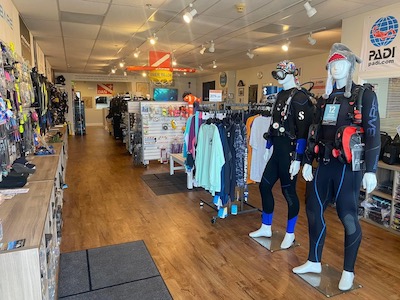
Just Tell Me What To Buy
Not sure what gear to buy? Most new divers get overwhelmed with choices, so I’ve put together a complete list of the gear I recommend.

Buying Guides
In-depth buying guides organized by gear type, including masks, fins, BCDs, wetsuits, regulators, lights, and bags. Compare options and get informed.
Risk vs Hazard
Not all hazards are dangerous. Hazards are things that can hurt you and risk is the chance they actually will. Inspired by The Human Diver's approach to safety.

Psychological Safety
Divers should feel comfortable speaking up and asking questions without fear of judgment. It is essential for preventing silent risks.

Situation Awareness
What is your ability to notice, interpret, and anticipate what is happening during a dive. Improves with experience and makes you a more capable dive buddy.
Recreational Decompression
Every dive involves decompression, as the body absorbs nitrogen and then releases it upon ascent. A no-deco dive means no obligation.

Surface Intervals Matter
The computer may know the time, but only you know your body. Give yourself enough time between dives for safety, comfort, and longer bottom times.

Dive Medical Insurance
Scuba diving is statistically safe, but the costs of a rare emergency can be catastrophic. Is dive insurance worth it? Short answer is yes.

Save a Dive Kits
Do not let a broken strap or missing O-ring ruin your dive. A save-a-dive kit keeps you in the water when problems pop up.

Medical Supplies
Cuts, stings, or worse? Learn what every diver’s first aid kit should include, straight from DAN’s recommendations. You might already have it all at home.

Carrying a Pony Bottle
Is a pony bottle smart backup or just extra drag? Find out when it makes sense and when better solutions exist.

Check-in Systems
Who notices if a diver does not come back? Learn the simple check-in habits that turn confusion into fast rescue.

Buoyancy and Weighting
Proper weighting is the foundation of buoyancy, gas efficiency, and safe ascents. Test, calculate, and adjust weights for stable, effortless diving.

Balanced Rig Concept
A Balanced Rig is a dive setup where you carry only as much weight as needed to compensate for the gas you will consume during a dive.

Setting up Dive Gear
Learn how to set up your tank, BCD, and regulator correctly. This guide covers gear assembly, air checks, and buddy checks to build solid dive habits.

Basic Hand Signals
Essential scuba hand signals for clear underwater communication, from OK and problem to low air, turn the dive, and safety stop.

Trim and Body Positioning
Trim, not just buoyancy, is the key to control underwater. Learn how body position and gear setup affect it, and how to stay flat and efficient.

Controlled Descents
Controlled descents prevent ear issues, crashes, and buddy separation. Learn to descend slowly, equalize early, and stay together for a smooth start.
Safety Stops
A safety stop is more than pausing at 15 feet; it is about control and awareness. Learn to hold depth, manage time, and stay with your buddy for a safe ascent.

Mask Clearing
Mask clearing is essential for handling leaks or floods underwater. Learn why it feels stressful and how to clear while staying calm and confident.

Free Flowing Regulator
A free-flowing regulator can empty your tank in minutes. Learn the main causes, how to respond calmly, and practical ways to prevent it from happening.

Sharing Air
Learn the differences between primary donate and octopus donate, their pros and cons, and how to practice with your buddy to be prepared.
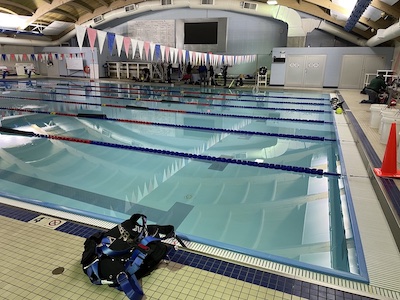
Practice in a Pool
Pools are perfect for sharpening scuba skills. Clear, calm conditions let you focus on buoyancy and trim. Learn how to make it count.

Giant Stride Entry
The giant stride is a reliable entry from boats or docks. Learn the steps, safety checks, and mistakes to avoid for a smooth, controlled start.

Seated Controlled Entry
The seated entry is a stable, low-impact way to enter from low docks or platforms. Learn when to use it, how to do it, and mistakes to avoid.

Shore Diving
Shore diving gives easy access to sites but needs safe entry and exit technique. Learn key methods, planning, and tips to protect yourself and your gear.

Exiting the Water
Avoid exit mistakes like early snorkel use, climbing ladders with fins, or dropping buoyancy. Keep distance and regulator in until safely aboard.

Shore vs Boat Diving
Should you wade in from the beach or giant stride off a boat? Compare the tradeoffs and see which dives fit your style.

Swimming Techniques
Surface swims can burn you out before the dive even starts. Learn how to move efficiently, conserve energy, and stay in control.

Surface Signaling
Waving is not always enough. Learn the hand signals, SMB use, and simple tools that keep you visible and safe on the surface.

Surfacing Far From Boat
Popped up and the boat is nowhere in sight? Stay calm, get visible, and know the smart moves that bring pickup your way.

Using a Snorkel
Does a snorkel really save gas or just get in the way? Learn when it helps and when your regulator is the safer choice...which it almost always is.

Inflate/Deflate BCD
Struggling at the surface often comes down to buoyancy. Master when and how to inflate or deflate your BCD for control and comfort.

Tired Diver Tow
If your buddy runs out of steam at the surface, do you know what to do? Learn simple tow techniques that bring both of you back safely.

Nitrox
Certification is simple, inexpensive, and valuable. Extends no-deco time, reduces nitrogen exposure, and prepares divers for repetitive dives.

Gear Maintenance
Proper scuba gear care prevents corrosion, leaks, and mold. Rinse after every dive, store cool and dry, and service regularly
CPR / O2 Provider
CPR and Oxygen Provider training prepares divers to respond fast in emergencies, deliver oxygen for DCS, and act effectively before help arrives.

How to Hover
Hovering means staying motionless and neutrally buoyant. Learn why trim is key and how to practice for control and effortless stops.

Finning Techniques
Frog, back, and helicopter kicks give divers better control and precision. Learn how they improve efficiency and teamwork.
dSMB Deployment
Deploying a dSMB midwater is key for safe ascents and boat pickups. Learn when to use it, the right gear, and how to launch while staying in control.

Night Diving
Night diving brings new marine life and vivid colors but needs extra prep and gear. Learn key differences, what to bring, and tips for safe dives after dark.

Why Carry a Light
A dive light improves visibility, communication, and safety on nearly every dive, not just at night. It should be standard equipment.

Finding a Buddy
Finding a dive buddy can be challenging, especially if none of your family or friends dive. So what is a person to do?

Roles & Responsibilities
Assigning roles before a dive reduces stress and prevents confusion. Key roles and a quick briefing keeps the team safe and coordinated.
Buddy Positioning
Buddy positioning is more than staying close; it is about depth, spacing, and contact. Learn how pairs, trios, and teams of four stay safe and in control.

New or Nervous Buddy
Diving with a nervous buddy takes patience. This guide shows how to set expectations, keep it simple, and build confidence.

Mentoring New Divers
Mentoring new divers works best with respect and timing. This guide shows when to help, how to offer support, and why leading by example matters most.

Handling a Bad Buddy
A bad buddy is about attitude, not experience. This guide shows how to spot risky behavior, address it calmly, and know when not to dive with them.

Communication in Limited Vis
Limited visibility makes underwater teamwork harder. This guide explains using lights, tight positioning, and clear protocols to stay connected and safe.
Why Teamwork Matters
Teamwork makes dives safer and smoother. This guide shows how clear communication and shared awareness reduce stress and prevent problems.

Mutual Support
Situational awareness and mutual support keep teams safe. How noticing changes and staying tuned to each other prevents problems early.
Team Ascents
Team ascents and safety stops need coordination and control. This guide shows how to align, stay together, and communicate for a safe, smooth ascent.

Task Loading
Task loading makes mistakes more likely. This guide shows how sharing responsibilities and spotting overload keeps teams safe and balanced.

Ending the Dive
A dive ends when everyone is out, gear secured, and checked. This guide shows how to exit, assist, and debrief as a team.

Acronyms & Terms
Scuba diving is full of acronyms, jargon, and half-explained lingo. If you have heard a term and were not sure what it meant, start here.

Best YouTube Content
Scuba diving keeps evolving, and YouTube is full of channels with gear reviews, safety tips, travel guides, and training for divers of all levels.

Insta-Buddy Checks
Most divers skip buddy checks. Shows how to weave safety into conversation by covering goals, gear, gas, and plan so checks actually happen.

Calling the Dive
Calling a dive means ending it early for any reason. Good teams support the choice, debrief later, and see early calls as maturity, not weakness.

Why Divers Quit
Divers often quit from cost, logistics, or confidence. Stay engaged with planning, community, good gear, and simple dives.

Diving & Family Life
Balance diving and family by sharing trips, respecting boundaries, involving partners, and creating rhythms supporting both.

Solo Diving Controversy
Solo diving replaces the buddy system with full self reliance, but despite training and redundancy it remains controversial and risky.

Diving with a Camera
Underwater photography adds joy to diving, but safety, awareness, and environmental respect must come before chasing the perfect shot.

Diver Code of Conduct
Emphasizes awareness, respect, and humility: protect the environment, support teammates, streamline gear, and let actions speak louder than words.

Trip Reports & Destinations
Real-world dive trip summaries to help you choose and prepare: itineraries, pictures, gear notes, conditions, and on-the-ground tips.

Travel Tips
What to pack, insurance, and paperwork. Stay healthy with motion sickness and illness prevention, manage jet lag, and time flights safely.

Dive Shops
Find your Chicago-area dive shop fast. Scan the map, compare agencies, rentals, air fills, and pool access, then plan your visit.

Private Instructors
Skip group classes. Get personalized scuba coaching in Chicagoland, including a trusted instructor recommendation.

Local Dive Sites
Explore Chicago-area quarries and Lake Michigan wrecks. Basic information, check-in procedures, depths, temperature notes, and on-site services.

Day Trip Dive Sites
Explore Midwest quarries and lakes. See the map, read quick site notes, and jump to full guides.

Community
Plug into Chicago’s dive scene. Active clubs, group dives, meetups, and how to find buddies.

Equalization Techniques
Most effective techniques for equalizing ear pressure during descent, including Valsalva, Toynbee, and Frenzel. Clear your ears comfortably and safely.

How to Avoid Getting Sick
Stay healthy on your scuba trip with tips to avoid dehydration, food poisoning, motion sickness, sunburn, jet lag, and minor injuries while diving abroad.

Pre-Dive Checks
Turn gear checks into a standard habit so you are not relying on memory or rushed last minute inspections at the edge of the water.

GUE EDGE Dive Planning
Walk through the GUE EDGE framework and see how a simple, repeatable structure makes dives more predictable for you and your buddy or team.
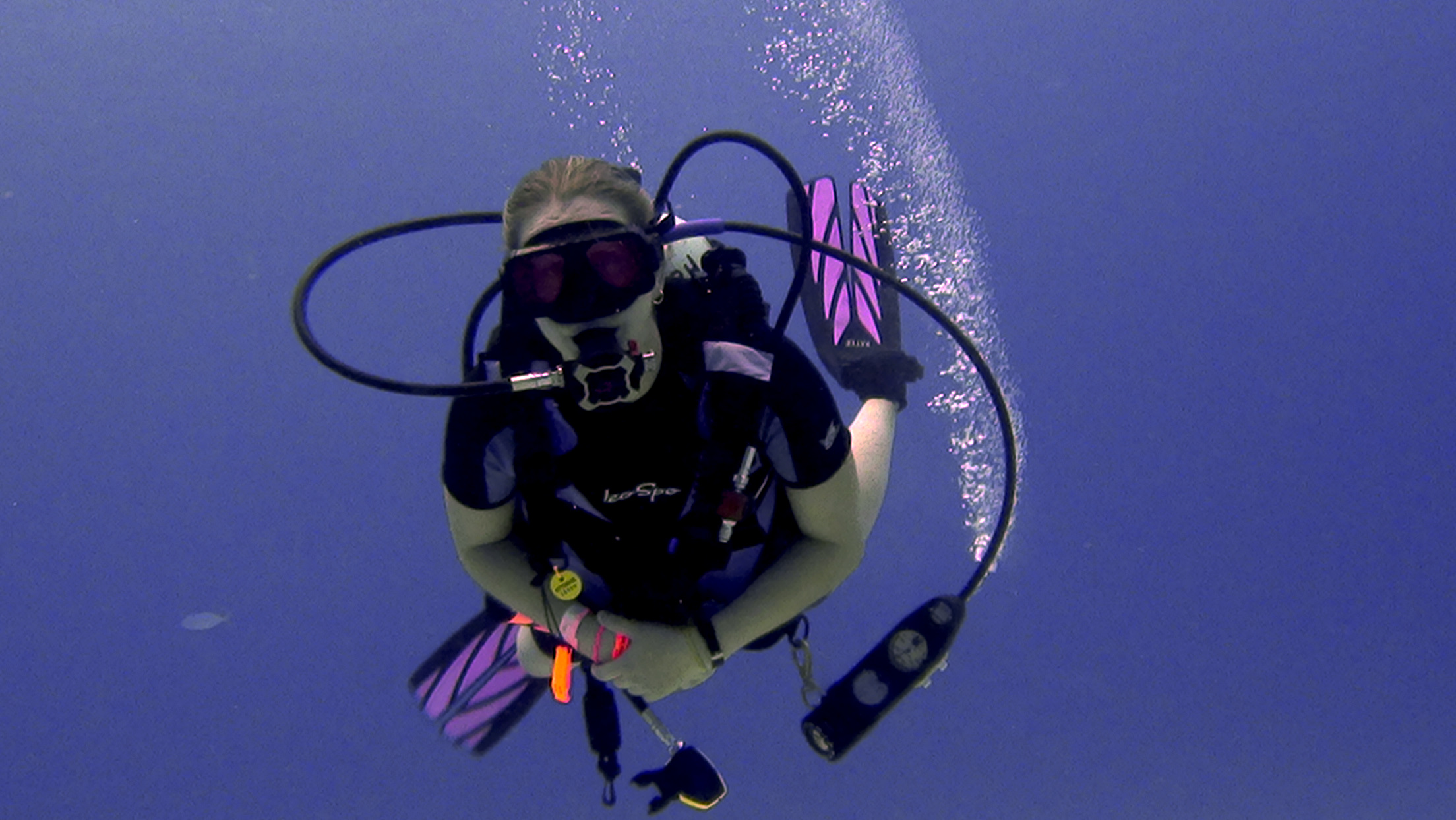
Do a Bubble Check
Every dive should include a bubble check as part of your pre-dive routine. A bubble check is your last chance to spot gear failures before a dive.

Understanding Nitrox
Understand Nitrox, its real benefits, limits, and safe depth planning. Learn how it reduces nitrogen load and how to use it correctly on recreational dives.

Minimum Gas Reserve
Calculate your minimum gas reserve with the CAT formula. 100 ft example, ATA math, AL80 PSI conversion, and why divers round up for safety.

Recreational Gas Planning
Practical recreational gas planning: RMV basics, Minimum Gas Reserve, and turn pressure methods. Equations and examples included.
Discover Scuba: What to Expect from Your First Try Dive
Curious about scuba diving? Learn exactly what to expect from your first try dive with our Discover Scuba guide—perfect for beginners.

Managing Cold, Heat, and Dehydration Post-Dive
Learn how to recognize and respond to post-dive cold, heat stress, and dehydration. Practical surface recovery strategies and risk management.

Motion Sickness: Prevention, Medication & Hacks That Work
How to prevent and manage motion sickness. Proven medications, helpful onboard tips, and personal strategies for staying comfortable on dive boats.
RMV vs. SAC: What’s the Difference and Why It Matters
Learn the difference between SAC and RMV. Understand why experienced divers rely on RMV and how to calculate it correctly.

Is Scuba Diving Dangerous?
Scuba diving looks risky, but how dangerous is it really? Learn the facts, common risks, safety stats, and how divers stay safe underwater.
Pre-Dive Routines
Standard pre-dive routines keep you from guessing, skipping steps, or relying on memory when you are distracted or rushed.

Understanding Nitrogen Narcosis
Learn what it is, how it affects divers at depth, and how to manage its risks. Includes symptoms, mitigation strategies, and why it’s a concern.

How to Log Your Dives
Learn how and why to log your dives, what to include, and best practices using digital apps or spreadsheets. No paper logbook required.

Flying After Diving
Learn safe surface interval rules before flying after scuba diving. Avoid DCS with expert tips and DAN-recommended wait times.

Decompression Illness: DCS, AGE, and PFO Risk
Learn the differences between DCS and AGE and how a PFO can raise risk. Get prevention tips and step by step emergency actions for safer diving.

Back Roll Entry
How to perform a safe, efficient back roll entry from small boats and inflatables. Covers gear prep, commands, execution, and post-entry procedures.
Emergency Action Plans (EAP)
Learn who should create one, when it’s reasonable to ask for one, and what a basic EAP should include. Even informal buddy dives benefit from a plan.

Pre-Dive Emergency Briefs
Emergency briefings don’t have to be formal, but they should be done. This page explains how to quickly confirm roles, gear, and contingency plans.

Surface Emergency Redundancy
Surface kits should include more than first aid. Spares, cutting tools, thermal protection, and how new divers can contribute without spending a fortune.

Post Incident Debriefing
Debriefing helps divers learn from real incidents and small breakdowns before they become serious. The DEBRiEF model can start honest conversations without judgment or blame.

(CNS) Oxygen Toxicity
Most rec divers never see CNS oxygen toxicity, but the consequences are immediate and severe. If you dive nitrox, you need to know the risks.

Avoiding Leg Cramps
If your legs seize up during surface swims or long finning, you’re not alone. Here’s how to cut the problem down and keep diving comfortably.

MOD & EAD Calculator
Calculate maximum operating depth and equivalent air depth for common Nitrox mixes using your PO2 limit.

RMV Calculator
Estimate your breathing rate (RMV) from a known dive so you can plan future gas needs safely and accurately.
Minimum Gas Reserve Calculator
Build a realistic reserve for two divers to ascend together from planned depth with margin.

Buoyancy and Weight Calculator
Get a defensible starting weight estimate based on suit, tank, and salt vs fresh water.

Travel Insurance
Dive insurance won’t save you when an airline loses your gear or a storm wipes out your trip. That’s where travel insurance matters.

What to Pack for a Dive Trip
Warm water dive travel doesn't require a drysuit, undergarments, or heavy tanks, but it still demands a thoughtful packing strategy.

How to Fly with Scuba Gear
Flying with scuba gear can be stressful, but with the right preparation, you can avoid surprises. Packing strategies to make sure your gear arrives safely.

What to Pack for a Dive Trip
Packing for a dive trip can be tricky! I cover all the basics you need, from dive gear to personal items, ensuring you have what you need.

Reef-Safe Responsible Diving
Practical choices that limit your impact without complicating the trip. Use reef-safe products, avoid unnecessary harm, and pick operators who protect.

Renting Gear Abroad
Renting gear can be a convenient option, but there are some important things to consider and ask about to ensure dives are safe and enjoyable.

Dive Paperwork
Dive paperwork is often overlooked, but it’s crucial for smooth travel. From certification cards to medical forms, make sure you’re prepared to dive.

Jet Lag, Sleep, and Staying Alert
Jet lag can throw off your energy levels and affect your dive experience. Learn how to adjust your sleep schedule, stay hydrated, and feel alert during the trip.

Why Buy From Local Dive Shop
Online prices are tempting. A local dive shop does far more than sell equipment. It keeps local diving possible through fills, maintenance, training and travel.
Emergency Action Plan Builder
This tool helps you build a basic EAP for a recreational dive site, charter, or training operation.
Scuba Hand Signals Reference
Most common signals recreational divers will encounter during training and real world diving.

Travel First Aid Kit
A practical checklist for travel-focused first aid, built to help you pack intentionally without overloading

Diver First Aid Kit
A three-tier first aid system for personal kits, topside support, and emergency oxygen decision-making.
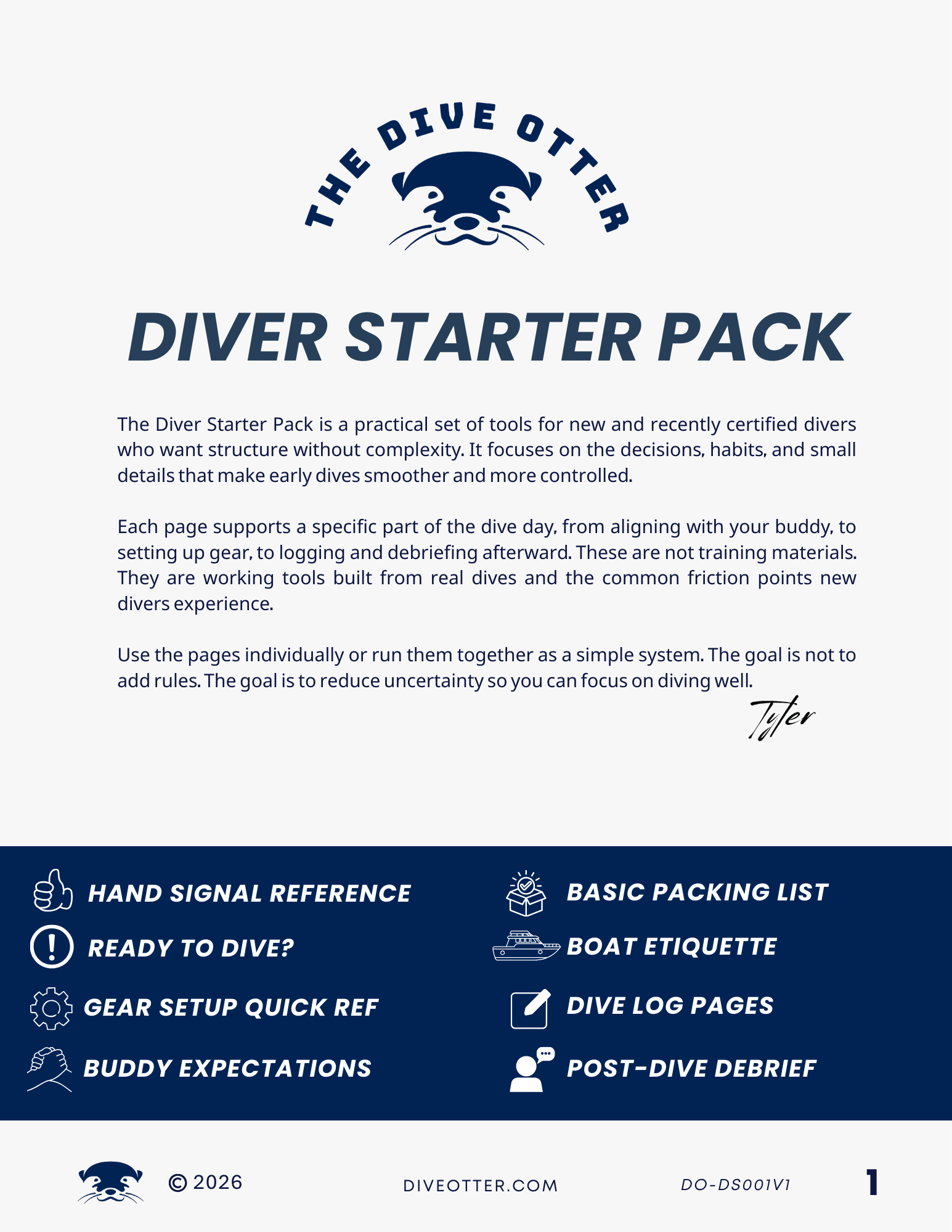
Diver Starter Pack
A practical set of tools for new and recently certified recreational divers who want structure without complexity.
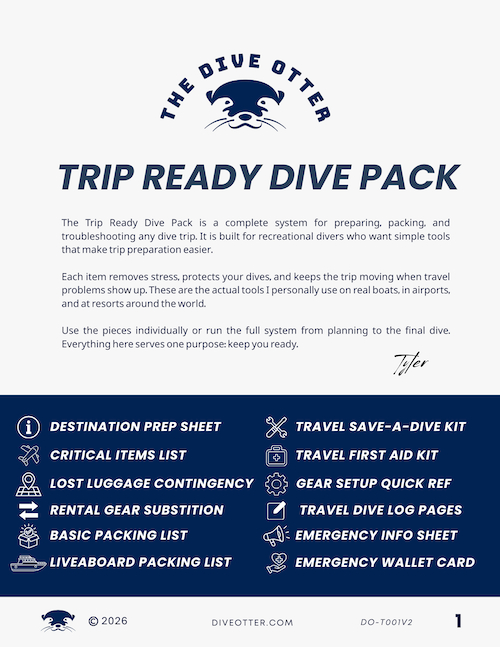
Trip Ready Pack
A travel-prep system for carry-on, checked, boat, liveaboard, and resort packing plus contingencies.

Mask Defog Options
Mask fog comes from condensation on the lens. Spit and baby shampoo work, but Stream2Sea defog is safer, consistent, and eco-friendly.
Scuba Gear Maintenance
Scuba gear is life support, not just equipment. Rinse after every dive, store cool and dry, and service annually to prevent corrosion, leaks, and failure.

Drysuit: Yes or No
A drysuit is not mandatory, but in consistent cold water it often becomes the most logical long-term choice. So what to buy, how and why?

Non-Diver Companion Travel
You share the destination, but your days often look very different. What works, what does not, and how to plan a trip that stays enjoyable for both people.
Dive Briefings Are Not Formality
An introduction to the UNITED-C dive briefing framework and how structured briefings help dive teams build shared understanding before entering the water.